/ Safety instructions
Safety instructions for contractors and visitors
Safety briefings for non-employees are not a mere formality, but a key component of workplace safety. Whether they are visitors, contractors, suppliers, or subcontractors, anyone on your premises must be informed about hazards, rules of conduct, and emergency procedures. Otherwise, there is a risk of accidents, production downtime, and significant liability risks.
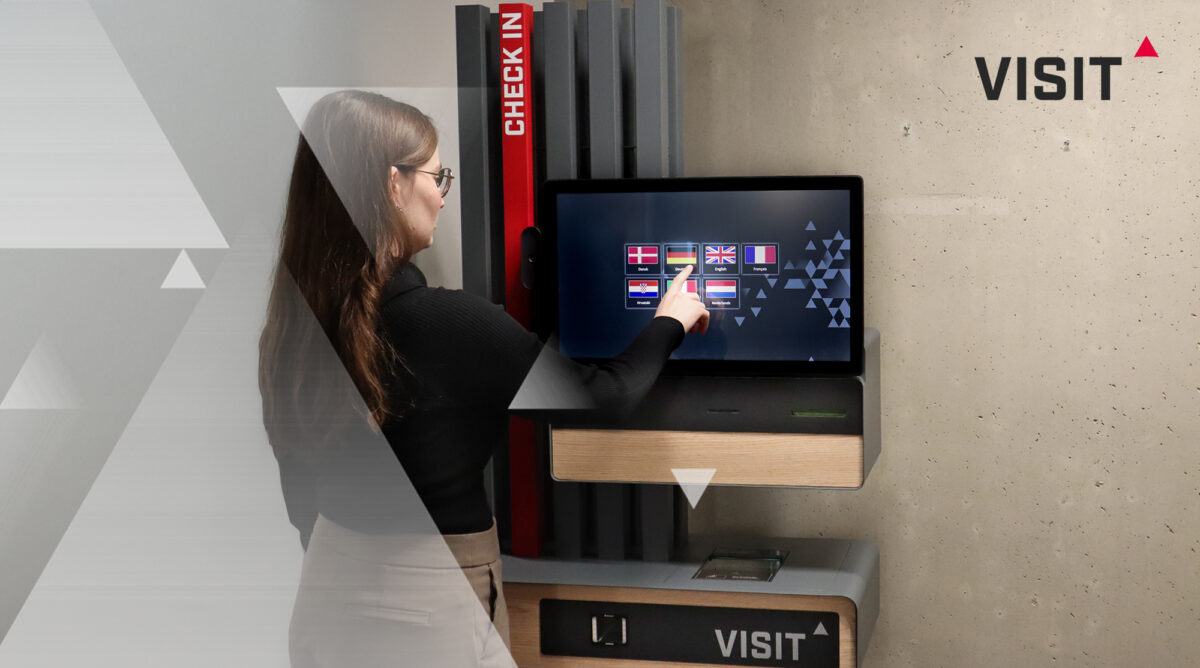
The regulations of the German Social Accident Insurance (DGUV) and occupational safety and health requirements obligate companies to ensure and document that contractors and visitors receive appropriate safety training. As a provider of digital visitor management solutions, ASTRUM IT has a thorough understanding of the practical and legal requirements—and shows you how to implement your contractor and visitor training in an efficient, audit-proof, and GDPR-compliant manner.
What is a safety briefing for visitors and contractors?
A safety briefing for visitors and contractors is designed to inform people from outside the company about site-specific risks and rules of conduct before they begin their work or stay on the premises. Structured safety training for visitors is essential, particularly in manufacturing companies, in logistics, or when handling hazardous substances. Among other things, it covers the following aspects:
- Sources of danger on the premises (e.g., machinery, forklift traffic, chemicals)
- Evacuation and emergency plans
- Locations of first-aid stations
- Fire safety measures
- Rules of conduct such as smoking bans, staying on designated paths, or prohibitions on taking photos or videos
- Requirement to wear visitor badges
- Required personal protective equipment (PPE), e.g., helmets, safety shoes, or respiratory protection
The specific safety briefing for visitors often depends on the area they are visiting. While there are fewer hazards in an office, significantly stricter regulations apply in production or warehouse areas. A tailored safety briefing based on the type of visit or work area is therefore essential, especially for contractors.
Contractor Induction: Special Requirements
Contractor induction applies to employees of external companies who are working on your premises under a contract for work or services. These include, among others:
- Subcontractors
- Tradespeople
- Service technicians
- Cleaning companies
- Suppliers and truck drivers
Under the DGUV guidelines for third-party contractor training, the client is obligated to cooperate in ensuring the safety of employees from external companies. The client must ensure that these employees have received appropriate training. In certain situations, a designated person must also be appointed to coordinate between the companies involved.
Training external contractors is often more complex than standard visitor training. External service providers sometimes perform work that poses hazards in itself—such as welding, machine maintenance, or activities involving hazardous substances. In these cases, interface risks must be clearly regulated and responsibilities defined.
For delivery traffic and freight forwarders, VISIT from ASTRUM IT also offers a yard management solution. This solution not only enables the management of delivery and pickup processes but also provides structured safety training for visitors such as truck drivers—including documentation.
Safety Training: Documentation Requirements and the GDPR
Companies are subject to clear documentation requirements. In the event of a claim, audit-proof documentation of safety training for visitors or training for contractors is also crucial for minimizing liability risks.
At the same time, the requirements of the GDPR apply:
- Data minimization
- Purpose limitation
- Right to erasure of personal data
In practice, a retention period of two years is recommended for the documentation of safety briefings. In the event of ongoing legal disputes—such as those resulting from an accident—a longer retention period may be necessary.
Digital systems such as VISIT support audit-proof documentation while also complying with data protection regulations. The Safety Training module ensures that non-employees have been properly trained before their visit begins—including logging the time, content, and confirmation. This makes it possible to track which person completed which version of the training and when. The completion status can be viewed in VISIT and exported for verification purposes. Optionally, successful participation can also be documented with a digital signature from the visitor.
At the same time, VISIT also allows you to specify how long a safety briefing remains valid. This means, on the one hand, that visitors and contractors do not have to repeat the briefing every time they visit. On the other hand, it ensures that their knowledge is regularly refreshed.
A key advantage of VISIT is its integrated version control for safety training materials. When content is updated, a new revision can be created. The company itself decides whether training sessions that have already been completed remain valid or must be repeated. This allows, for example, spelling corrections, design adjustments, or other editorial changes to be published without unnecessarily retraining all affected individuals. In the case of significant content changes, however, the previous version can be specifically marked as invalid.
Templates for Safety Briefings—Useful or Not?
A general template for safety briefings for contractors or visitors is only of limited use. The specific hazards vary considerably depending on the industry, location, and area of activity. Templates for documentation are more useful. Occupational safety associations provide samples for this purpose. In general, clear documentation of the date and time of the training, combined with a confirmation such as:
“I have read and understood the contents of the safety training,”
Modern systems should do more than just document that content was displayed. With optional comprehension questions, VISIT can verify whether the information provided was understood. The safety briefing can consist of slides, videos, and review questions. This allows for more transparent documentation of the briefing’s delivery while simultaneously increasing participants’ attention.
With the integrated Safety Instruction Designer, companies can create, maintain, and update their safety training sessions themselves. Content can be structured in various languages using text, images, videos, and optional review questions. This allows for independent customization without having to hire an external service provider for every change to content or design.
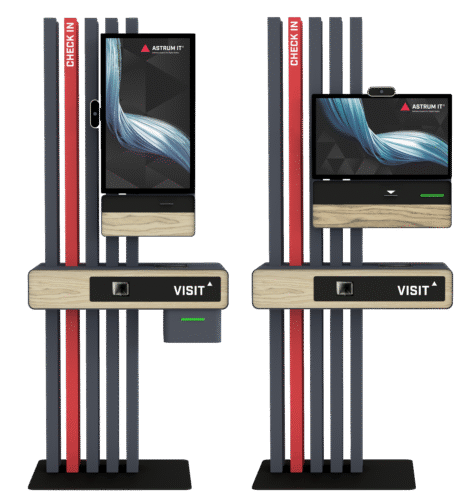
Safety Briefing Terminals and Online Safety Briefings
Safety briefings for visitors or contractors can, in principle, also be conducted verbally or in paper form. However, these methods are organizationally cumbersome, prone to errors, and do not always comply with data protection regulations. Digital solutions, such as a safety training terminal or online safety training, offer clear advantages:
- Completion as part of self-registration at a terminal, kiosk, or tablet, or integration into the online check-in process
- Multilingual content
- Automatic validity check
- Audit-proof and data protection-compliant documentation
In the VISIT system, one or more safety briefings can be assigned to a visit type and delivered in a defined sequence. This allows briefings to be structured modularly and combined to suit the respective group of people. For example, a visitor receives general site rules, while additional content on personal protective equipment, hot work, or special hazard areas can be provided for tradespeople. Suppliers and truck drivers, in turn, receive specific information relevant to traffic routes, loading and unloading, or conduct on the company premises. This ensures that individuals only need to complete the content required for their specific visit.
The safety training is not designed as a standalone e-learning process, but is directly linked to the visit process. To begin a visit, the training required for the respective visit type must be valid. VISIT automatically checks whether a training session is still valid or needs to be completed again.
Depending on the process, the training can be completed prior to the visit via online check-in, on-site at the kiosk system or on a tablet, or outside the system—for example, as part of a in-person group training session. Training completed outside the system can also be documented and verified centrally.
To start a visit process, a valid training session must be on file. Training can be conducted:
- at the terminal as part of self-check-in (e.g., “Visitor/Contractor Check-in” or “Supplier Check-in”)
- via the VISIT Plus online check-in
- or outside the system, such as during a group training session
Repeat intervals can also be set individually. The module is available with the “Secure” license and integrates seamlessly into ASTRUM IT’s full-cycle approach—from consulting and implementation to hosting and operation on German, GDPR-compliant servers.
Why use VISIT for Safety Instructions?
- Intelligent versioning with configurable validity periods for training sessions already completed
- Multiple training modules per visit type and customizable order; automatic verification that required training sessions are valid
- Conducted online, at a kiosk, on a tablet, or as part of a group training session
- Multilingual content with slides, videos, and optional comprehension questions
- Digital signature and traceable documentation of completion
- Independent content management using the integrated authoring tool
- Direct integration into visitor, contractor, and supplier processes
Conclusion: Digital training for contractors and visitors as part of your digital vitality
Digital solutions create transparency, reduce administrative overhead, and support traceable documentation. VISIT directly integrates safety training with processes for visitors, contractors, and suppliers. Modular training modules tailored to each type of visit, automatic validity checks, and intelligent version control ensure that every person receives the necessary and up-to-date content without unnecessary repetition. With various delivery methods, effectiveness checks, and the integrated authoring tool, the process can be flexibly adapted to locations, groups of people, and operational requirements.
With VISIT, ASTRUM IT offers a customized, scalable solution from an ISO-certified provider that efficiently integrates safety briefings into your processes—whether via safety briefing terminals or online check-in.
This not only strengthens your compliance but also boosts your company’s digital vitality.
Get a no-obligation consultation on safety instructions and visitor management now.
Contact us: